








FAQ: Frequently Asked Questions About Coffee
Time to read 20 min



Sign up for our newsletter and receive 10% off your first order.
Time to read 20 min
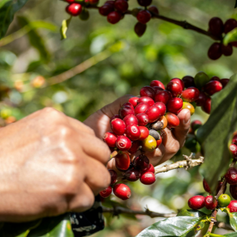
Coffee, before it is a drink, is first and foremost a fruit. Yes, a fruit! Coffee grows on a shrub (the coffee tree) and comes in the form of small red (or yellow, depending on the variety) "cherries". Inside, there are usually two seeds: these are what we call coffee beans. Once harvested, these seeds are processed, dried, then roasted... and that's where the magic begins: aromas, textures, intensity, everything largely depends on these steps.
Coffee is now cultivated in what is called "the coffee belt", an area around the equator where the climate is ideal: heat, humidity, altitude, and distinct seasons. Each producing country (and even each region) influences the final taste. A coffee can be fruitier and more floral, more chocolatey and nutty, or even spicier and more intense, simply because the soil, altitude, coffee tree variety, and processing methods are not the same. Fascinating, isn't it?
Contrary to popular belief, coffee doesn't have just one "true" taste. It can be mild, acidic, full-bodied, sweet, sometimes even surprising (notes of berries, caramel, cocoa, citrus...).
This profile mainly depends on three things:
The variety of the coffee tree (the best known being arabica and robusta)
The processing after harvest (washed, natural, honey, etc.)
The roasting (light, medium, dark), which develops aromas and influences bitterness, body, and intensity
That's also why two "black" coffees can be completely different in taste.
Add to that your choice of machine, the quality of your water, and the material of your cup!
Because it's simply a part of everyday life. For some, it's a comforting ritual. For others, a boost for energy and concentration. And often... it's both. Coffee brings people together: at the office, at home, on a terrace, while traveling. It also has this unique ability to adapt to all tastes: strong espresso, creamy latte, light filter, iced coffee, decaffeinated, with or without milk, sweetened or not.
Ultimately, understanding coffee means discovering a living product that travels from farm to cup and tells a story at every stage.
If you're just starting out, keep these ideas in mind:
Coffee isn't just "strong" or "not strong": it can be intense without being bitter, and mild without being bland.
Bitterness is not a guarantee of quality: it can come from very dark roasting... or over-extraction.
Freshness changes everything: freshly roasted and well-preserved coffee offers many more aromas.
There is no "best" method: the best is the one you like and can easily reproduce.
Because before being ground, brewed and savored, coffee is an agricultural product, shaped by nature. And that's precisely what makes it so fascinating: each coffee is unique, because it reflects its origin and the care taken in its cultivation.
As mentioned above, coffee doesn't grow everywhere. It needs a particular climate: heat, humidity, well-distributed rainfall and relatively stable temperatures. That's why the majority of the world's production is found in what is known as the coffee belt, an area located around the equator, between the Tropics of Cancer and Capricorn.
It includes major producing countries such as:
Central and South America (e.g. Colombia, Brazil, Guatemala)
Africa (e.g. Ethiopia, Kenya, Rwanda)
Asia (e.g. Indonesia, Vietnam)
Each region has its own specific characteristics, and you can taste it in the cup!
The word terroir often comes up in the world of wine... and it also applies perfectly to coffee. Terroir is the combination of all the elements that influence the plant: altitude, soil type, climate, sunshine, humidity, cultivated varieties, and even local agricultural practices.
For example:
At high altitudes, beans generally ripen more slowly, which can result in more aromatic and complex coffees.
Volcanic soil can bring a beautiful richness and a particular structure.
A more humid or drier climate will influence how the cherry develops... and thus the final taste.
This is one of the reasons why two coffees from different countries (or even two neighboring regions) can offer completely opposite profiles: one very fruity and floral, the other more chocolatey and round.
When we talk about origin, we're not just talking about a name on a bag. We're talking about a complete process: cultivation, harvesting, processing, drying, roasting... then extraction at home.
And at each stage, coffee can be oriented towards a different style. This is why the same country (or even the same farm) can produce several coffees with distinct tastes.
Ultimately, understanding the origin of coffee means understanding why there isn't "one" coffee, but a multitude of coffees, each with its own personality, history, and nuances. A true journey from field to cup.
When you're shopping for coffee, you often come across words like Arabica, Robusta, blend, single origin, or even more specific varietal names. And it can quickly seem very technical. But in reality, it's super useful information: it already gives a good idea of what you'll find in your cup.
Arabica is the most popular species in specialty coffees. It is generally grown at high altitudes, in more delicate conditions, which often explains its higher price.
In terms of taste, Arabica is often associated with:
more complex aromas (fruit, chocolate, flowers, caramel, etc.)
a more pronounced acidity (in a good way: lively, bright)
a usually softer bitterness
a often more refined texture, depending on the roast and method
In short, if you like aromatic, nuanced, sometimes more "elegant" coffees, Arabica is often a good starting point.
Robusta, on the other hand, is a more resistant species (hence its name). It grows more easily at lower altitudes and is often cheaper to produce.
In the cup, Robusta is known for:
a more intense, more direct flavor
more body (heavier texture)
a more present bitterness
and above all, more caffeine than Arabica
It is often found in some espresso blends to add crema, power, or a bolder profile. If you're looking for a very strong coffee, or an espresso that "wakes you up," this is a path to consider.
The price of coffee depends on several factors, but the species plays an important role. To simplify:
Arabica often requires more care, grows more slowly, and is more sensitive → so it generally costs more.
Robusta is more productive and more resistant → often more affordable.
But beware: a more expensive coffee is not automatically "better" for you. It all depends on your taste and how you prepare it.
A useful nuance:
Species: Arabica, Robusta (the big families)
Variety: "sub-types" within a species (e.g. Bourbon, Typica, Caturra, Geisha... on the Arabica side)
Certain varieties are known for a particular intensity, sweetness, or very distinctive aromatic notes. It's a bit like grape varieties in wine: it doesn't tell you everything, but it gives valuable clues.
You can think of it like in the wine world:
Species (coffee) = grape type (general family)
→ Arabica and Robusta are a bit like saying Vitis vinifera (the large family that includes most wine grape varieties) vs other less common grape species.
Variety (coffee) = grape variety (the precise "sub-type")
→ Within Arabica, you have varieties like Bourbon, Typica, Caturra, Geisha... a bit like, within wine, you have grape varieties like Pinot Noir, Cabernet Sauvignon, Chardonnay, Riesling.
And as with wine, it gives clues about the profile:
Geisha (coffee) is often recognized for a very aromatic and floral side... a bit like a very fragrant Riesling.
Bourbon can be rounder and sweeter... a bit like a smoother Merlot.
Obviously, the final result also depends on the terroir, processing, and roasting (just as wine depends on terroir and winemaking), but remember that species = large family, and variety = more precise identity.
Now that you know all this, the next time you look at a bag of coffee, remember this:
Arabica: often more aromatic, finer, more nuanced.
Robusta: often more powerful, more bitter, more caffeinated.
A blend can seek balance (taste + crema + intensity).
A single origin often highlights terroir and aromas.
With these benchmarks, you can already choose a coffee that better suits your preferences, and understand why two "similar" bags don't have the same price or the same taste.
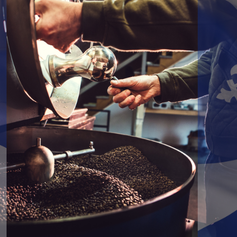
Roasting is the step that transforms green coffee into aromatic brown coffee. Before roasting, a coffee bean has very little smell and none of the aroma we associate with coffee. It's the heat that triggers the reactions that develop the aromas, color, and much of the in-cup character. And that's also why two coffees can be very different, even if they come from the same country, or sometimes the same farm.
We often talk about three main families: light, medium, and dark roasts. Each one emphasizes different aspects of the coffee.
Light Roast: Often a livelier, more aromatic profile, with notes that can evoke fruits, flowers, citrus. You taste more of the origin (terroir) and the specific characteristics of the bean.
Ideal if you like nuanced coffees, or filter methods.
Medium Roast: The "balanced" style: a good part of the original aromas are retained, while adding more roundness and natural sweetness (caramel, nuts, chocolate).
Perfect if you want a versatile coffee, good for both filter and espresso.
Dark Roast: A more intense, full-bodied profile, with more roasted notes, sometimes very dark cocoa, smoky, spices. Here, you taste the roast itself more than the origin.
Often appreciated by those who like a "strong" or very comforting coffee.
An important point: a darker coffee is not necessarily "stronger" in caffeine. Roasting greatly influences the taste (bitterness, intensity, texture), but caffeine largely depends on the species (Arabica vs. Robusta), the recipe, and the quantity used.
What we often call "strong" is rather:
more bitter
more full-bodied
more intense on the palate
And that can come from a dark roast, but also from over-extraction, or a recipe that's too concentrated.
Because roasting acts like a "magnifying glass." It can highlight the natural aromas of a coffee, or on the contrary, crush them if it's pushed too far for the desired style. The result: two coffees with the same origin can yield opposite cups if one is light roasted and the other dark.
By understanding these levels, you can more easily choose according to your taste:
Do you like fruity, light, aromatic coffees? → go for light
Are you looking for a balanced, round, all-purpose coffee? → medium is your friend
Do you like a full-bodied, intense, very comforting coffee? → explore dark
And most importantly: there isn't one "best" roast. There's the one that matches your palate, your method, and the moment you drink it.
When we say a coffee is "good," it can mean a thousand things. It can be chocolatey, fruity, round, light, intense... and sometimes we taste it, but we're not sure how to explain it. The good news? You don't need to be an expert to recognize the main taste families. You just need to observe a few simple markers.
A fruity coffee contains no added flavors. It mainly comes from:
origin and terroir (soil, altitude, climate)
variety (some are naturally more aromatic)
processing ("natural" or "honey" processed coffees can accentuate fruity notes)
a lighter to medium roast, which allows more of the original aromas to come through
Fruity notes can evoke berries, citrus, apple, peach, sometimes even hints of wine or jam. It's not sweet like juice, but rather aromatic, a bit like smelling a ripe fruit.
When a coffee is described as sweet or round, we often mean:
a sensation without harshness on the palate
a balance between bitterness and acidity
a more velvety texture
notes of caramel, milk chocolate, nuts, biscuit
Often, this type of coffee comes from a medium roast, or a profile designed to be easy to enjoy daily. It's often found in "blend" coffees.
Bitterness is part of coffee, but it can be more or less pronounced. It can come from:
a dark roast (more prominent roasted notes)
over-extraction (coffee steeped too long, grind too fine, water too hot)
or a coffee with a naturally more intense profile
A simple trick: if the bitterness lingers in the mouth and feels "drying," it's often a sign that the coffee was extracted a bit too strongly (or for too long), not necessarily that the coffee is "bad."
To develop your palate, forget complicated descriptions and start with these three axes:
Acidity (or vivacity): it gives a brighter, more "sparkling" impression, often associated with fruitiness.
Sweetness: a round, pleasant sensation, a caramel/chocolate/nutty side.
Bitterness: roasted notes, very dark cocoa, sometimes smoky; the stronger it is, the more "intense" the coffee seems.
To this, we can add two useful sensations:
Body (texture on the tongue): light like tea, or thicker and syrupy
Finish: does the taste disappear quickly or linger?
Next time you drink coffee, try this:
Take a small sip and let it circulate in your mouth for 2-3 seconds.
Ask yourself: is it more fruity, chocolatey/nutty, or roasted?
Just note one word. Only one. (That's enough!)
Repeat the test at a different temperature: as coffee cools slightly, aromas often emerge more.
The more you do it, the more natural your vocabulary becomes—and the more confidently you choose your coffees, because you know what you truly like.
Each preparation method influences the taste of coffee. Even with the same bag, an espresso and a filter coffee can offer two completely different experiences.
Espresso is an extraction under pressure, over a very short time. The result: a small quantity of coffee, but very concentrated, with a lot of texture (the famous "body") and marked intensity.
What you often find in espresso:
a richer and denser cup
aromas that emerge differently (chocolate, nuts, caramel, spices… depending on the coffee)
a more sensitive extraction: it can become bitter or too acidic if the recipe is not well adjusted
Common mistake: grinding too fine or extracting too long → draws out bitterness.
Consult our grind guide.
Filter coffee (pour-over type V60, Chemex, classic filter coffee maker, etc.) relies on a slower extraction, with water passing through the coffee more gently. This is often the method that best highlights the aromatic notes and terroir.
In filter coffee, you often notice:
a lighter and clearer cup
more nuances (fruity, floral, delicate notes)
a great importance of consistency (grind, dose, water)
Common mistake: water too hot or grind too fine → more bitter and “dry” taste.
The French press yields a coffee with a lot of body because there is no paper filter: natural oils remain more in the cup.
What it gives:
a round and textured cup
an often more "comforting" profile
sometimes a little sediment, which is normal
Common mistake: stirring too hard or steeping too long → bitterness and heaviness.
The Moka pot produces a coffee that is more intense than filter coffee, but it is not a true espresso as the pressure is different. It's a great option for a strong coffee at home.
Common mistake: heating too strongly → burnt taste. A gentle heat and a more stable extraction are better.
Cold brew coffee is slowly extracted in cold water for several hours. This often results in a cup that is:
very smooth
less bitter
perfect over ice or as a "latte"
Common mistake: using too fine a grind → muddy texture and less clean taste.
If you want to improve your coffee without changing your machine, start with this:
The grind (see our guide)
Too fine = more bitter / over-extracted
Too coarse = too acidic / too weak
The coffee-to-water ratio
Too much coffee = too heavy a cup
Not enough = flat cup
Extraction time
The longer it is, the more it extracts (up to bitterness)
Too short, it lacks depth
Ultimately, the "best" method is the one that suits your tastes and your routine. The important thing is to understand that coffee is about balance: with two or three small adjustments, you can go from a decent cup to a truly enjoyable one, day after day.
Caffeine is the "active" ingredient in coffee that provides a stimulating effect. It doesn't add magical energy, but it primarily helps reduce the feeling of fatigue by temporarily blocking certain sleepiness signals in the brain.
The result: you feel more alert, more focused... but sensitivity varies greatly from person to person.
This is often where people are surprised: caffeine can remain active for several hours. Depending on the sources and your metabolism, the effect can last a long time, and it's often recommended to avoid caffeine at least 8 hours before bedtime if sleep is fragile.
In short: if you say "coffee doesn't affect me," but you don't sleep well... it's worth trying coffee earlier in the day.
Over time, the body gets used to it. It's normal to develop a tolerance: coffee wakes you up less, and you tend to drink more to get the same effect. Conversely, when you cut it off suddenly, some people experience a small "reset": headaches, irritability, fatigue for a few days (nothing abnormal, just the body adjusting). If you want to reduce, the most comfortable way is often to do it gradually.
In Canada, Health Canada suggests maximum daily caffeine limits:
Adults (18+): up to 400 mg/day
Pregnancy / breastfeeding / planning a pregnancy: up to 300 mg/day
Children and adolescents: 2.5 mg/kg body weight / day
Health Canada indicates that an 8 oz (237 ml) filter coffee can contain around 179 mg, while a "brewed" coffee is around 135 mg (this varies depending on the recipe and format).
More concretely, the 400 mg/day limit for adults corresponds to approximately 2¼ cups of filter coffee or about 3 cups of brewed coffee. For pregnant women, it's about 1⅔ cups of filter coffee or a little over 2 cups of brewed coffee.
And this is where it helps to remember that caffeine isn't just in coffee: a cup of black or green tea contains about 30 to 50 mg, a can of cola about 36 to 46 mg, and even cocoa contains some! For example, chocolate milk ~ 8 mg per cup, sweetened chocolate ~ 19 mg per 28 g. So, for children/adolescents, a 30 kg youth would aim for ~ 75 mg/day, which is ≈ 1 to 2 cups of tea or ≈ 2 cans of cola, and at 40 kg ~ 100 mg/day, which is ≈ 2 to 3 cans of cola).
The idea is: everything adds up throughout the day, even if it's not coffee.
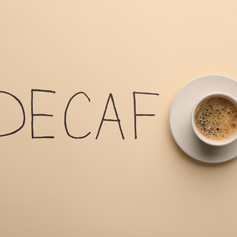
Not quite — but it's very low. According to Health Canada averages, an 8 oz (237 ml) decaffeinated coffee contains about 3 mg of caffeine.
So, for many people, it's a super reassuring option in the afternoon or evening if you like the taste of coffee but not the stimulating effect.
Most of the time, caffeine is not "a problem": it's mainly a question of dose and timing. If you notice nervousness, palpitations, lighter sleep, or reflux, it's often a sign that your body is telling you: "a little less" or "a little earlier." And if you are pregnant, breastfeeding, or have a medical condition or are taking medication, it is always advisable to discuss it with a healthcare professional for tailored advice.
Sources:
Health Canada — Caffeine in Foods (daily consumption guidelines, caffeine content tables, including decaffeinated).
Sleep Foundation — Caffeine and Sleep Problems (mechanism via adenosine and recommendation to avoid caffeine ~8 h before bedtime).
Journal of Neuroscience (2011) — Arousal effect of caffeine depends on adenosine A2A receptors… (caffeine as an antagonist of adenosine receptors; link to wakefulness).
Because behind a simple cup, there's a complete chain: cultivation, transport, processing, packaging... and even how we prepare our coffee at home. The idea isn't to aim for perfection, but to understand the options available to make more conscious choices.
Coffee is a climate-sensitive crop, often grown in biodiversity-rich regions. The most frequent issues revolve around:
deforestation, when natural environments are replaced by intensive crops,
the use of pesticides and fertilizers depending on agricultural practices,
water management, some processing methods use more water,
and the footprint related to transport and packaging.
The good news: there are many initiatives and practices to reduce these impacts.
Certifications serve as benchmarks: they indicate that a coffee meets certain environmental, social, or both criteria. They can be useful, but they don't tell the whole story, and they're not all equally valuable depending on what you're looking for.
A few simple points to remember:
Some certifications focus on agricultural practices (reduction of certain products, soil protection, etc.).
Others focus more on working conditions and remuneration.
A coffee can be "sustainable" without certification, if the roaster is very transparent about its purchases and partners (traceability, farm projects, etc.).
In practice, mainly look at where the coffee comes from, if the origin is precise (region/coop/farm), and if the brand explains how it works with producers.
Organic coffee (meaning biological) is generally associated with cultivation that avoids certain synthetic chemical inputs. It's a good environmental indicator, but it's not automatically a "social" indicator. Organic doesn't necessarily mean fair trade, and vice versa. The best scenario is when we combine:
responsible agricultural practices,
good traceability,
and an ethical approach on the human level.
Without changing your habits overnight, here are simple actions that have a concrete impact:
Prefer whole bean coffee (less processing, often fresher, and you can better control the dosage).
Reduce waste: reusable filter or compostable paper filter, recyclable containers, larger sizes if it matches your consumption.
Pods/Capsules: if you use them, check the recovery/composting programs actually available where you live, otherwise it quickly becomes a lot of waste.
Compost coffee grounds or use them in the garden/compost.
Avoid waste: measure the right amount, keep coffee well stored (less "coffee thrown away because it no longer tastes good").
Learn about transparency: a roaster who speaks clearly about its origins, partners, and purchasing practices is often a good sign.
Making a responsible choice is not about finding "impact-free coffee" (spoiler alert: it doesn't exist). It's more about moving towards coffee that is:
more transparent,
more respectful of ecosystems,
and fairer for the people who produce it.
Ultimately, every small gesture counts... and a consciously chosen cup is a simple way to support more sustainable coffee, here and now.
Because good coffee isn't just a matter of variety or roast: freshness plays a huge role in taste. A coffee can be excellent on paper, but disappointing in the cup if it's too old or poorly stored. Here, we give you simple guidelines to enjoy it to the fullest at home.
After roasting, coffee slowly begins to lose its aromas. This is normal: it's alive, it releases gases (this is called degassing, hence the valve on coffee bags), and aromatic compounds oxidize over time.
Result: the older the coffee gets, the more it can become:
more flat, less aromatic
more dull, fewer nuances
sometimes more bitter or "dusty" on the finish
That's why freshly roasted coffee can seem rounder, sweeter, and "cleaner" tasting, even without changing machines.
Here are some easy guidelines when buying:
Look for a roast date (not just a "best before" date).
The roast date is the true indicator of freshness.
Choose according to your method:
filter = often light to medium, espresso = often medium to dark (this is advice, but not an obligation).
Start with your tastes:
do you like chocolate/nutty? go for "rounder" profiles.
do you like fruity/bright? explore lighter coffees and specific origins.
Buy the right amount:
it's better to buy a little less, more often, than to keep a large bag for too long. and for that, our subscriptions are perfect!
Coffee's enemies are mainly air, heat, light, and humidity. The goal: protect it from all of these.
Do this:
Keep coffee in an opaque airtight container to protect it from light.
Store it in a cool, dry place, away from oven heat, sunlight, and other temperature variations.
Close the bag tightly (or use a clip) if you keep the original packaging. An airtight container will always be ideal.
Avoid this:
Leaving the bag open on the counter.
Placing it near the stove or a window.
Storing it in a transparent container exposed to light.
For everyday use, avoid the fridge: coffee is very "absorbent" (humidity and odors), and temperature variations can harm the aromas. The freezer, however, is not a "magic" solution either: if the bag is opened often, the risk of condensation and off-flavors increases. On the other hand, for longer storage, several experts and food science studies suggest that freezing can slow aromatic aging, provided that it is portioned and hermetically sealed (ideally in small portions), then allowed to return to room temperature before opening to avoid condensation.
Ground coffee loses its aromas much faster than whole bean coffee because it is more exposed to air. If you want to maximize freshness:
prefer whole bean coffee
and grind as you go. Equipping yourself with a coffee grinder is the best option for this.
In summary: well-chosen and well-stored coffee is the simplest way to improve your cup without changing anything else. Freshness is often the detail that turns "decent" coffee into truly satisfying coffee, day after day.
Don't hesitate to contact us, by phone at (514) 354-1472 or by email at info@macafeine.ca.
Our team will be happy to assist you.
Gaelle, store manager
Has a big soft spot for espresso, but also cappuccino with Sproud pea milk.
Your cart is currently empty.
Start Shopping


