








10 coffee myths we still hear all the time
Time to read 9 min





Sign up for our newsletter and receive 10% off your first order.
Time to read 9 min
Table of contents
We drink coffee every day. We talk about it a lot. We have our routines, our preferences... and often a few certainties.
"The darker it is, the more caffeinated it is."
"An espresso is necessarily stronger than a filter coffee."
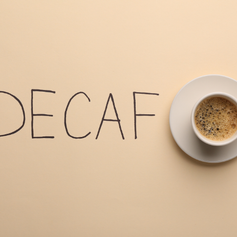
"Decaf contains no caffeine at all."
These are phrases we still hear very often.
The problem is that coffee is much less simple than it seems. The variety of the bean, its roast, the grind, the quantity used, the brewing method, and even the size of the cup can completely change the result.
Many of these coffee myths come from quick associations or deep-seated habits. However, when you take the time to look closer, the reality is often more nuanced.
So today, we’re clearing things up.
Here are 10 coffee myths that deserve to be debunked.


Not necessarily.
This is arguably one of the easiest associations to make: a very dark coffee tastes more intense, toastier, and often more bitter. So we automatically assume it also contains more caffeine.
But a "strong" taste and the amount of caffeine are two different things.
Caffeine content depends in particular on the type of coffee used, the quantity of beans, the brewing method, and the serving size.
In other words, choosing the darkest roast on the shelf is not a guarantee of getting the most caffeinated cup.
If you like dark coffees, choose them primarily because you enjoy their toasted, chocolatey, or full-bodied notes.
Not just for the wake-up call.
It's true... and false at the same time.
An espresso is very concentrated. In equal quantities, it therefore contains much more caffeine than a drip coffee.
But we generally don't drink the two in the same quantity.
An espresso represents a small dose, while a cup of drip coffee can easily contain 250, 350, or even 450 ml.
In total, a large cup of drip coffee can therefore provide more caffeine than a single espresso.
This is where the word "strong" becomes misleading.
An espresso is more concentrated in taste.
That does not automatically mean it provides you with more caffeine in your cup.

Not quite.
The decaffeination process removes the vast majority of the caffeine present in the bean, but a small amount may remain.
Therefore, a decaf is not necessarily a 0 mg caffeine coffee.
That said, the difference from regular coffee remains significant, which makes it a very good option for people who want to reduce their intake while keeping the pleasure of coffee.
And by the way: no, decaffeinated does not mean bland.
There are now excellent decaffeinated coffees, with real aromatic profiles, body, and plenty of character.
If your last memory of decaf dates back to the slightly sad restaurant coffee of the 2000s... it might be worth giving it another chance.


Let's add some nuance to that one.
Yes, caffeine can have a mild diuretic effect.
But a cup of coffee is also largely composed of water.
For a person who consumes caffeine regularly and within a normal intake, coffee also contributes to daily liquid consumption.
This obviously doesn't mean we recommend replacing all your water with coffee.
But your morning cappuccino doesn't magically erase the two glasses of water you drank before, either.
As is often the case with coffee: it's all a question of quantity.
No.
To store your coffee at home, we recommend avoiding both the refrigerator and the freezer.
Coffee is very sensitive to air, light, heat, humidity, and surrounding odors. The fridge and freezer can expose beans to temperature fluctuations and condensation, especially when the container is taken out and put back in regularly.
Coffee can also absorb odors present around it.
And let's be honest: nobody is looking for notes of last night's pizza in their espresso.
The simplest way is also the most effective:
in its bag, well-sealed, or in an airtight container;
in a dry place;
at room temperature;
away from light;
far from a heat source.
A closed cupboard is therefore perfect.
The goal is not to keep the coffee cold, but to protect it as much as possible from air, humidity, and temperature changes.
And ideally, buy an amount suited to your consumption so you can enjoy the coffee while it's still fresh.


Not necessarily.
The shiny appearance of some beans comes primarily from the roasting process.
When coffee is roasted longer, its structure becomes more porous and certain oils can rise to the surface.
That is why dark roasts often have a shinier appearance.
A matte bean can therefore be perfectly fresh.
And a shiny bean does not automatically tell you that it just came out of the roaster.
Freshness is better evaluated using several indicators: the roast date when available, how the coffee is stored, its aromas... and above all, what you find in your cup.
The moral: don't judge your coffee solely by its look.
It’s beautiful. It’s photogenic. It makes you want to pull out your phone.
But the crema doesn’t tell the whole story.
This thin, hazelnut-colored layer that forms on an espresso depends on several factors: the coffee used, its freshness, the roast, the grind, the extraction, and even the proportion of Arabica to Robusta.
You can therefore have an espresso with a very generous crema... that isn't particularly good.
And conversely, an espresso with a more discreet crema can be delicious.
The best way to evaluate an espresso is still to taste it.
Is it balanced?
Does the bitterness take over everything?
Is there any sweetness?
Are the aromas pleasant?
The crema is part of the experience, but it doesn’t replace taste.

Fortunately, no.
Bitterness is part of coffee, but it is just one flavor among many others.
Depending on the bean, its origin, its roast, and its preparation, you can find notes of chocolate, caramel, hazelnut, citrus, red fruits, flowers, spices...
Some coffees are very mild.
Others are more lively.
Still others are naturally fuller-bodied.
When bitterness crushes absolutely everything else, it is not necessarily a sign of quality.
It may simply come from a very dark roast or an extraction that needs a little adjustment.
And while we’re at it: acidity is not necessarily bad either.
Good acidity can bring freshness and remind you of certain fruits or citrus.
The goal isn’t to make acidity or bitterness disappear.
It’s to find a balance that you enjoy.
That is a cliché that is hard to kill.
Arabica is often associated with finer, more aromatic coffees, while Robusta generally possesses more body, bitterness, and caffeine.
But reducing one to “good” and the other to “bad” would be much too simple.
The final quality depends on a long series of factors: the variety, the terroir, how the coffee is grown and harvested, the processing of the bean, its storage, its roasting, and obviously its preparation.
In fact, today we find very high-quality Robustas with aromatic profiles that are much more interesting than the image usually associated with them.
And in some espresso blends, a proportion of Robusta is even sought after to provide body, intensity, and a more generous crema.
Arabica and Robusta are above all different.
Not “good” vs “bad”.
This is probably the most counter-intuitive myth on the list.
We often talk about freshness, and with good reason.
But coffee roasted a few hours ago is not necessarily in its prime.
During roasting, carbon dioxide forms inside the bean.
After roasting, the coffee gradually begins to release this gas. This is what we call degassing.
When a coffee is extremely fresh, this large amount of CO₂ can sometimes make extraction more difficult, particularly in espresso.
You therefore need to give the coffee some time to stabilize.
How much?
There is no magic number.
It depends on the coffee, the roast level, the brewing method, and even your preferences.
What you need to remember above all is this:
“Fresh” does not necessarily mean “roasted this morning”.
A good coffee actually has a period during which it expresses its aromas particularly well.
Because coffee is full of convenient shortcuts.
Dark = strong.
Crema = good espresso.
Arabica = quality.
Decaf = zero caffeine.
It’s easy to remember.
The reality is just a little more interesting.
Before ending up in your cup, coffee has been grown, harvested, processed, dried, transported, roasted, ground, and finally extracted with water.
At each of these steps, something can change.
And that is also why the same coffee can be completely different depending on how you prepare it.
Quick recap:
A dark coffee necessarily contains more caffeine → False
An espresso always contains more caffeine than a filter coffee → False
Decaffeinated coffee contains no caffeine → False
Coffee necessarily dehydrates you → False
The fridge or freezer are the best places to store coffee → False
An oily bean is necessarily fresher → False
A beautiful crema guarantees a good espresso → False
Good coffee must be bitter → False
Arabica is always better than Robusta → False
Coffee is necessarily better immediately after roasting → False
Yes, we just made an entire list of “false”.
But there is one rule we can probably all agree on:
the best coffee is the one you love to drink.
You don't need to become an expert to better appreciate your coffee.
Understanding a few principles is already enough to better choose your beans, adjust your preparation, and above all understand why two coffees can be so different.
Light or dark.
Espresso or filter.
Arabica or Robusta.
Caffeinated or decaf.
There is no single right answer.
At Ma Caféine, we prefer to give you the tools to find the one that matches your tastes.
Discover our selection of coffees, roasted here in Quebec by different roasters, at macafeine.ca.
Which coffee contains the most caffeine?
It is not possible to determine this solely by the roast color. The type of bean, the amount of coffee used, the brewing method, and the volume of the drink all have an influence.
Is an espresso stronger than a filter coffee?
An espresso is more concentrated. However, a large cup of filter coffee may contain more caffeine in total than an espresso due to its much larger volume.
Does decaf still contain caffeine?
Yes, generally in very small amounts. Decaffeination removes the vast majority of the caffeine, without necessarily eliminating it completely.
Should coffee be stored in the refrigerator or freezer?
No. For home storage, opt for a tightly closed bag or an airtight container kept in a dry place at room temperature, away from light and heat.
Is a beautiful crema a sign of a good espresso?
Not necessarily. While crema can provide some indications about the coffee and its extraction, taste, balance, and texture remain much more important.

Gaëlle, Ma Caféine shop manager
Passionate about coffee, tea, and quality products, Gaëlle shares her tips, discoveries, and inspirations on the Ma Caféine blog to help you better enjoy every cup.
Your cart is currently empty.
Start Shopping


