







It's never easy to find a coffee shop we like at first, and generally when we find one, we don't dare change it.
We also ask ourselves many questions about the terms used, the different roasting methods, and the different labels.
Ma Caféine therefore offers you this guide to help you find your way among the vast selection of coffee available.
In our opinion, this will require the following 4 criteria:
- Arabica or Robusta?
- 100% original or blend?
- Roasting
- The different labels

ESSENTIAL LIBRARY
Le café, c'est pas sorcier (french)
- Learn all the methods for making coffee
- Discover the world of coffee: the places, the words, the practices.
- Learn how to taste coffee.
- Learn the basics of latte art.
- And much more!


Arabica or Robusta?
You might be wondering what the difference is between the two, and especially which one is right for you. 100% Arabica? A blend of both?
Let's first define these two terms.
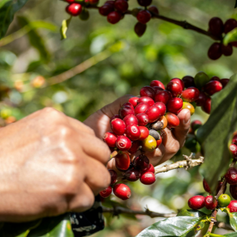
Arabica is the species of coffee plant called Coffea arabica, which comes from the word "Arab".
It consists of two varieties: typica and bourbon.
It has a very pronounced aromatic profile and contains little caffeine.
Robusta is the variety of the coffee plant species called Coffea canephora.
Its aromatic qualities are weak, and it contains more caffeine. Its main advantage is its low cost and ease of production. This makes it the most widely produced and marketed variety. It is primarily found in instant coffee and vending machines.
| Coffea Arabica | Coffea Canephora | |
|---|---|---|
| Altitude | 600 à 2400 mètres | 0 à 700 mètres |
| Température | 15 à 24 °C | 24 à 30 °C |
| Maturité | 6 à 9 mois | 10 à 11 mois |
| Taux de caféine | 0.6 à 1.4% | 1.8 à 4% |
IN SUMMARY

100% Origin or blend?
In stores, you will find two types of coffee: 100% single origin ( pure origin ) and blends of several origins ( blend ).
The term single origin has several definitions, but the most widespread refers to a coffee whose beans come from a single terroir, harvested for example on the same farm.
We can also describe as pure origin the harvests from several farms put in the same washing station.
The blend , meanwhile, refers to a coffee whose beans have different origins, such as country or region.
It helps to harmonize the taste of coffee for the majority, and is widely preferred by manufacturers.
It should be noted that, when well-made, a blend can be just as good as a single-origin wine!
A little anecdote?
Honoré de Balzac, the famous French writer, was a coffee enthusiast and made his own blend by buying his beans from different places in Paris!
If you would like to try it yourself, you will first need to choose the brewing method that will be used with this coffee.
Next you will choose its color, which will determine its tasting profile (aroma, body, etc.)
Ultimately, you'll just have to find the right proportion that will please your palate!
Limit yourself to a maximum of 3 or 4 coffees to avoid diluting the aromas too much and your blend losing its personality.
In summary
Un mélange combine plusieurs origines.
Les deux peuvent vous garantir un excellent café en tasse.
100% Arabica Coffee Beans


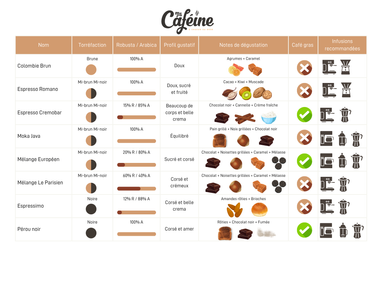




Roasting
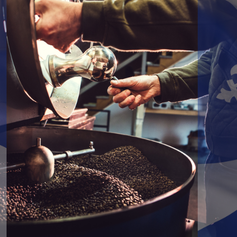
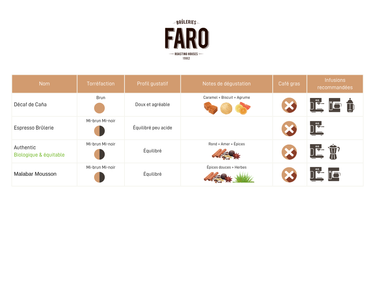
Roasting is the principle of cooking the coffee bean for a longer or shorter time in order to develop the aromas it contains.
It is important to know that each green coffee bean has its own potential for aromas and flavors, which it inherits from its variety, its terroir, its method of cultivation or processing.
Roasting allows the full potential to be revealed. The aromas develop during the drying phase and are generally three or four in number.
At the end of roasting, before the 2nd crack (see below) , approximately 800 aromas develop, as well as acidity, flavors, body, and sweetness.

A - Drying phase: during the 1st phase, the coffee bean changes from green to yellow, and its moisture content decreases. The bean then absorbs heat.
B - The internal moisture turns into steam under the heat, and the bean releases carbon dioxide. The pressure then increases to 25 bars, causing the first crack (the characteristic sound emitted by the bean during roasting).
C - Development phase: the grain then gains in volume (1.5 to 2 times more) but loses in mass (up to 11%). It emits heat and turns brown (Strecker reaction) , shedding a skin called "silver film".
The second crack occurs if roasting continues, thus causing the CO2 to continue its expansion.
The grain can then lose up to 22% of its mass.
D & E - Pyrolysis: The aromas are destroyed during this last phase and replaced by bitter flavors, which eliminates acidity and reduces body.
Beyond the second crack, the surface of the grain becomes oily and the texture charcoal-like.
IN SUMMARY
Le grain de café perd donc en masse, et mécaniquement le taux de caféine augmente.
Un café noir sera donc plus caféiné qu'un café brun.
De même, il café noir sera plus huileux, la torréfaction faisant ressortir l'huile du café.
Aussi, un café brun aura plus d'arômes qu'un café noir.

THE DIFFERENT LABELS
There are several labels in the world of coffee, which you have surely already seen on a bag and wondered what it could possibly mean.
It should be noted that coffee and tea were among the first products to obtain Fair Trade or Sustainable Development type certifications.
Here is a description of the main labels found on coffee bags to guide you in your choice, while respecting fair, responsible and sustainable consumption, if that is your choice.

Foods from Quebec
Founded in 1996 by members of the Quebec agri-food sector, Aliments du Québec is a non-profit organization whose mission is to promote the agri-food industry through the brands Aliments du Québec and Aliments préparés au Québec and their respective variations, for the benefit of the Quebec economy.
To establish the origin of its products, Aliments du Québec follows a meticulous verification process where information regarding ingredients, their origin, and availability in Quebec is corroborated through reliable sources and experts (federations, associations, etc.). This process is based on federal CFIA regulations and provincial regulations of the Ministry of Agriculture, Fisheries and Food. Verified products thus meet some of the highest quality standards in the world.
Guarantees of the label
It is the only organization that guarantees the origin of the products it controls and verifies. It promotes Quebec's agri-food industry.
It therefore assures you that your coffee was roasted and/or bagged in Quebec.

Organic Canada
Certification allows the marketing of your organic products in Canada.
Guarantees of the label
- Environmental and climate protection
- The preservation of soil fertility
- Maintaining biodiversity
- Respect for natural cycles and animal welfare
- The non-use of synthetic chemicals
- The non-use of GMOs
- Transparent labeling for the consumer

Fairtrade
The Fairtrade Max Havelaar label was created by Mexican producers from the UCIRI cooperative in 1988.
The Dutch NGO that had been financially supporting them then agreed to help them in a different way by launching the idea of a label. This would allow producers in developing countries to no longer be dependent on anyone, and to be the driving force behind their own production and development.
The independent organization is based in the Netherlands and chooses the name of a hero of a 19th-century anti-colonial novel very famous in the Netherlands, Max Havelaar.
Its principle is defined by the phrase "trade, not aid".
Guarantees of the label
The Fairtrade label, based on the ISO 65 standard, offers environmental, social and economic guarantees.
It provides concrete and measurable guarantees on six key points:
- Equal treatment : all producer organizations and economic actors can apply for certification under the same conditions for a single certification system. There are no arbitrary exceptions.
- Reliability : guaranteed, risk management. There is no certification without full compliance at every stage. There is no certification without inspection.
- Transparency : the rules are precise and systematically published.
- Continuous improvement : existence of a quality management system.
- Independence : presence of a board of directors and a specific certification committee.
- Trust : external audits are conducted regularly to ensure that all these principles are respected.

Rainforest Alliance
Rainforest Alliance is an international NGO that works to conserve biodiversity and ensure sustainable livelihoods for local populations.
It certifies a commitment to sustainable development. In the coffee, tea, and cocoa sectors, this label aims to:
- Growing quality coffees while integrating respect for the environment.
- Supporting producers so that they can be self-reliant and competitive.
- Protect workers' rights.
- Supporting programs that improve the living conditions of producers.
Guarantees of the label
Farms are awarded the "Rainforest Alliance Certified" seal of approval if they meet the following criteria:
- Decent living and working conditions,
- Gender equality
- Access to education for children in farming communities.
- Protecting waterways, recycling or reducing waste.

Fair For Life
The Fair For Life label allows the marketing of fair trade products throughout the world.
Guarantees of the label
This Ecocert label guarantees:
- a fair purchase price higher than the market price.
- a protection mechanism for producers in times of crisis: the guaranteed minimum price, calculated on the basis of production costs.
- decent and safe working conditions throughout the supply chain, regardless of the link in the production chain and its country.
- strengthening the autonomy of producers.
- environmentally friendly agricultural practices that encourage the transition to organic farming.
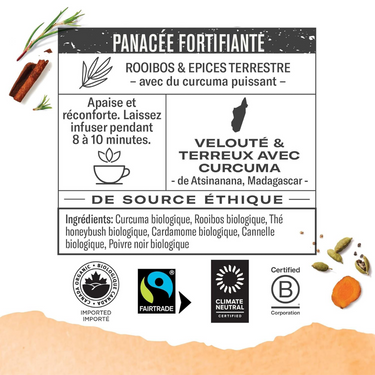
Organic, Rainforest and Fairtrade products
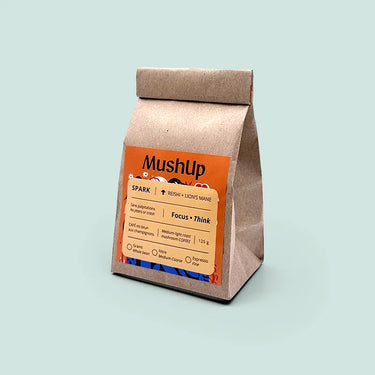
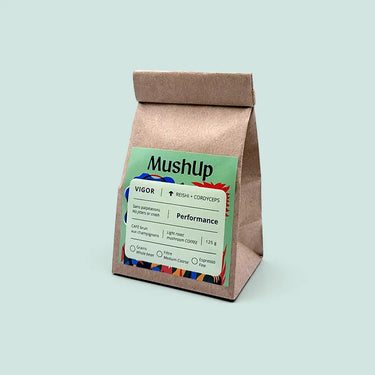
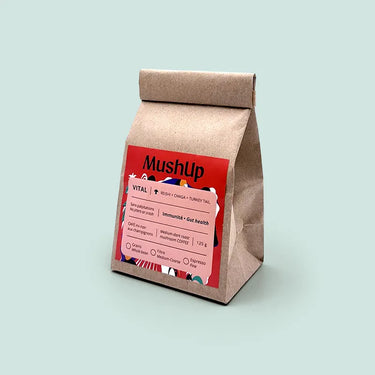



IN SUMMARY
Un label bio garantit principalement l’absence de pesticides et d’intrants chimiques dangereux dans les méthodes de culture, la protection de la biodiversité et le respect des conventions fondamentales de l’Organisation Internationale du travail.
Pour autant, ces labels et certifications sont aussi contestables.
D’une part, il est difficile d’en vérifier les effets, tant les origines de production sont fractionnées et isolées géographiquement. La plupart des fermes sont situées dans des régions montagnardes tellement reculées qu’il est impossible de les auditer régulièrement. Vous ne savez donc pas exactement quels sont les effets de votre achat.
Discover our whole bean coffees


